
3″ True Union Ball Valve – PVC – S X S EPDM w/adapter to TXT

3″ True Union Ball Valve – PVC – S X S EPDM w/adapter to TXT

Original price was: $220.16.Current price is: $110.00.

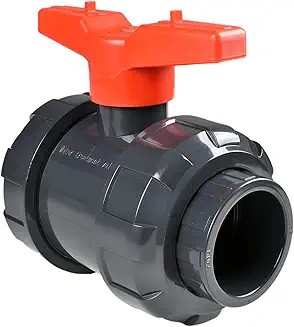
A 3-inch true union ball valve in PVC with socket-to-socket (S x S) ends and EPDM seals, plus an adapter to TXT, is a service valve used in irrigation systems to isolate large sections of pipe.

Breaking that down:

  • 3″ (three-inch) size – Suitable for larger mainlines and high-flow applications typical in commercial irrigation or large farms.

  • True union design – The valve body can be taken apart (union nuts loosened) without breaking the pipeline; this makes maintenance, replacement, and cleaning much easier.

  • PVC construction – Durable, corrosion-resistant plastic ideal for water systems, lightweight, and cost-effective.

  • S x S (socket x socket) – Ends are designed to be solvent-welded (glued) into PVC pipe using standard PVC cement (often with included adapters).

  • EPDM seals – Ethylene Propylene Diene Monomer elastomer seals that are resistant to water, sunlight, and many chemicals — a good general-purpose sealing material.

  • Adapter to TXT – This usually means one connection is adapted to a TXT (tie-in) port, such as a threaded or flanged connection (e.g., TXT flange, threaded female) to interface with other components like filters, pressure gauges, sensors, or manifolds.

In irrigation systems, valves like this serve as on/off shutoffs for mainlines, submains, or service branches.

Summary (Features & Benefits)

Feature Benefit
3″ True Union Easy maintenance & removal
PVC Body Lightweight, corrosion-resistant, cost-effective
EPDM Seals Good water/chem compatibility
S x S Ends Standard PVC installation
TXT Adapter Flexible tie-in to other components
Ball Valve Design Low pressure drop & clear open/close
SKU: 143-ITUV300SE Categories: , ,

Description

What It’s Used For

Typical applications include:

  • Mainline isolation on farms, greenhouses, or commercial landscapes.

  • Service access points before filters, pumps, or pressure regulators.

  • Segmenting zones for maintenance or seasonal shutdown.

  • Emergency shut-off in case of leaks or line repairs.

  • Integrating instrumentation (via the TXT adapter) such as pressure sensors, flow meters, or sample taps.

Because it’s a 3″ valve, it’s often found on larger systems rather than small drip laterals.


Pros (Why You’d Choose This)

1. Easy maintenance
True union means the valve can be removed without cutting pipe – great for service calls or seasonal teardown.

2. Good durability
PVC resists corrosion and chemicals commonly found in agricultural settings.

3. Low friction loss
Ball valves provide a straight-through flow path when open, minimizing pressure drop.

4. Clear open/closed indication
Most ball valves have a lever that clearly shows whether the valve is open or closed.

5. EPDM seals
EPDM has broad chemical compatibility and performs well with water and typical fertilizers/pesticides.

6. Adapter flexibility
The TXT adapter lets you tie into other devices or transition between pipe types, adding versatility.

7. Cost and weight
PVC ball valves are significantly lighter and cheaper than metal alternatives like brass or stainless.


Cons / Limitations

1. Pressure/temperature limits
PVC ball valves usually are limited to ~150 psi and ~140°F; they’re not suitable where temperatures or pressures exceed those ranges.

2. Not ideal for throttling
Ball valves are best as on/off devices — partial opening can lead to seat wear.

3. EPDM may not suit all chemicals
If your system uses specialty chemicals (e.g., certain solvents, oils), EPDM might swell or degrade — you might need FKM/Viton.


Other Options (Depending on Needs)

Here are common alternatives or variations you might consider:

By Material

  • PVC True Union Ball Valve – FKM seals

    • Better chemical resistance if you use specialty chemistries.

  • CPVC Ball Valve

    • Can handle higher temperatures if heat is a factor.

  • Metal Ball Valves (Brass, Stainless)

    • Tougher for abrasive or high-pressure systems; more expensive.

By Connection Type

  • Threaded Ball Valve

    • Good for retrofit or where solvent welding isn’t practical.

  • Flanged Ball Valve

    • Better for very large mains; easy to bolt into place.

  • Camlock Ball Valve

    • Quick connect/disconnect in temporary or seasonal setups.

By Function

  • Butterfly Valve (PVC or metal)

    • Better for larger diameters where cost or weight matters more than precision sealing.

  • Gate Valve

    • Lower cost for simple shut-off but slower to operate and not as service-friendly.

  • Check Valve (Inline)

    • Prevents backflow; not a replacement for shut-off but often paired with ball valves.

Go to Top